Why Doesn't Stainless Steel Rust? The Secret Behind Its Corrosion Resistance
Date:2026-11-25 10:32:37 Visit:42
The secret lies in its chemical composition and the protective layer that forms on its surface.
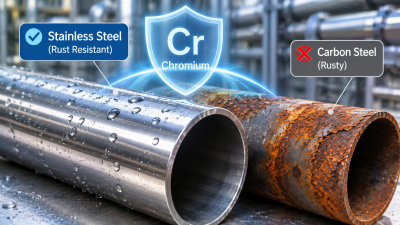
The Main Secret — Chromium
The key element responsible for the corrosion resistance of stainless steel is chromium (Cr).
According to the generally accepted classification, stainless steel contains at least 10.5% chromium. When exposed to oxygen, chromium forms a thin protective film of chromium oxide on the metal's surface.
This protective film:
· Prevents aggressive environmental substances from directly attacking the metal;
· Slows down oxidation processes;
· Protects the metal from deterioration;
· Can naturally regenerate when oxygen is present.
This process is known as passivation.
What Is the Passive Layer?
The passive layer is an extremely thin, almost invisible protective film that forms on the surface of stainless steel.
An interesting fact: even if the metal surface is scratched, the protective layer can naturally regenerate in the presence of oxygen.
However, stainless steel is not completely immune to corrosion. Exposure to chlorides, high temperatures, and aggressive chemicals can damage the protective film and lead to corrosion.
Therefore, choosing the right stainless steel grade plays an important role in ensuring the durability of industrial equipment and piping systems.
Which Stainless Steel Grades Offer Better Corrosion Resistance?
Not all stainless steel grades provide the same level of corrosion resistance. For example, AISI 304, 316, and 321 have different chemical compositions and performance characteristics.
Which grade is better suited for seawater, the chemical industry, or high-temperature applications? What are the differences between AISI 304 and 316, and why does molybdenum content matter so much?
Find out in our next article!